

Storage During a House Move: Bridging Completion Dates (Essex Guide 2026)
Are you looking for storage during a house move?
Moving home in Essex but facing a gap between properties? You’re far from alone and there’s a practical solution.
Buying or selling a home in England rarely goes entirely to plan.
Even when you’ve done everything right, instructed a solicitor promptly, arranged your survey, and booked your removal company well in advance, the transaction can still hit unexpected turbulence.
A delay in the chain, a hold-up with mortgage paperwork, or a last-minute legal query can shift your completion date by days or even weeks.
That leaves a very real question hanging: if you have to be out of your current home but can’t yet get into the next one, where do your belongings go?
For thousands of homeowners every year, professional storage during a house move is the answer.
Rather than risk losing a sale, storage is not a last resort, but a sensible, well-planned bridge between one property and the next.
This guide explains how it works, what to look for, and how to use it to your advantage.
Table of Contents
Moving in Essex

Essex is one of the most active property markets in the Southeast, with strong demand across commuter towns like Chelmsford, Brentwood, and Colchester, as well as the coastal areas around Southend-on-Sea and the Tendring district.
The county’s position within busy and often lengthy property chains, many of which connect into the wider London market, means that completion delays are a genuine and recurring feature of moves here, not an outlier scenario.
For Essex homeowners, having a removal company that can move seamlessly between removals and storage and back again isn’t a luxury. It’s often the difference between a stressful scramble and a manageable, well-supported transition.
What’s covered in this guide:
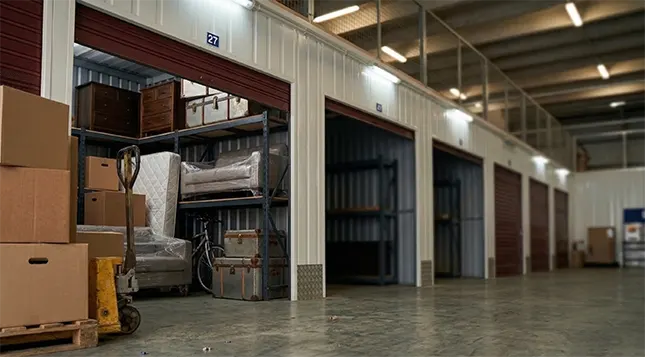
- Why completion dates slip — the most common causes of delay in UK property transactions
- How removal company storage works — from containerised warehousing to professional packing
- Short-term vs long-term options — matching storage duration to your specific situation
- What to look for in a storage-ready removal company — key questions to ask before you book
- Planning ahead — practical steps to protect yourself before delays happen
- Why GoodMove is a trusted choice — experience, accreditation, and a tailored approach
Why Completion Dates Change — and Why It Matters

In England and Wales, a property sale only becomes legally binding at exchange of contracts.
Until that point and sometimes even after, the timetable can shift.
This is one of the features that makes the UK property market particularly susceptible to delays compared with some other countries.
The most common causes of a disrupted completion date include:
- Mortgage lender delays: additional checks, valuations, or underwriting queries extending beyond the expected timeframe
- Conveyancing hold-ups: outstanding local authority searches, title register issues, or queries from the buyer’s solicitor
- Chain instability: a buyer or seller elsewhere in the chain pulling out, renegotiating, or encountering their own delays
- Survey findings: structural concerns raised in a homebuyer’s report that require further investigation or negotiation
- Probate complications: particularly common with inherited properties, where legal title may take time to establish
- Last-minute disagreements: disputes over what’s included in the sale, such as fixtures, fittings, or specific items
According to data from HSBC UK, the average UK property transaction now takes around five to six months to progress from offer to completion — a clear sign that delays are far from unusual.
For anyone who has already handed in notice on a rented property, or agreed a departure date with their buyer, this can rapidly become a stressful and logistically complicated situation.
How Removal Company Storage Works in Practice
A professional removal company doesn’t simply load up a van and wish you luck.
When there’s a risk that your move-out and move-in dates won’t align, an experienced firm will already have contingency options ready, including integrated storage.
Here’s how the process typically works:
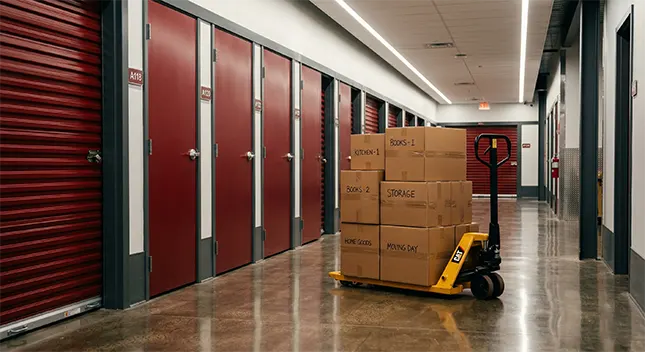
Your belongings are transferred directly into dedicated storage containers housed within a secure warehouse facility.
These containers, usually timber-framed or steel, keep your possessions separate from those of any other customer, reducing any risk of mix-up or accidental damage.
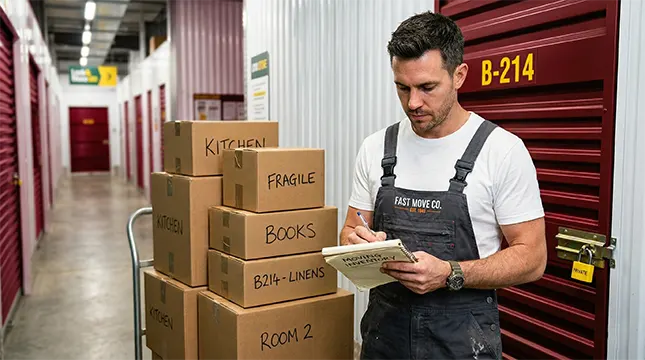
Each container is sealed and assigned a reference number, with an itemised inventory created and maintained throughout the storage period.
You’re not simply leaving boxes in a shared room, your belongings remain in their own, clearly identified space for the entire duration.
At GoodMove, storage is fully and efficiently integrated into the removal process, meaning your possessions are handled by the same trusted team from start to finish.
Proper Preparation and Packing for Safe Storage

The quality of packing makes a significant difference to how your belongings fare during a storage period, especially when that period turns out to be longer than anticipated.
Items placed into storage without adequate preparation are vulnerable to pressure, moisture, and movement.
Professional removal companies use breathable packing materials, double-walled boxes, and appropriate wrapping techniques to protect everything from everyday kitchenware to fragile artwork and electronics.
Furniture is disassembled where helpful and wrapped individually to prevent surface damage.
This level of care isn’t only relevant for long-haul international removals.
It matters just as much when your belongings might be in storage for a fortnight while completion paperwork catches up.
Flexible Terms That Work Around Your Timeline
When completion dates are fluid, rigid contracts quickly become a problem.
Reputable removal companies offer storage arrangements that can be adjusted.
Extended, shortened, or transferred into a delivery booking — as your situation develops.
This flexibility is a significant advantage over standalone self-storage units.
Using a self-storage provider is time-consuming and hard work; it typically requires you to transport your own items to the facility, manage all the packing and loading yourself, and may hold you to fixed rental periods.
A full-service removal company manages everything end-to-end; from the day your items leave your current home to the day they’re carried into your next one.
Keep Your Move and Storage Under One Roof

One of the biggest advantages of using a removals company for storage is the continuity it provides.
From professionally packing your belongings to transporting and placing them into secure storage, everything is managed by a single, experienced team.
Introducing a third party often complicates matters, increasing the risk of miscommunication, delays, and unnecessary handling, all of which can lead to damage.
By keeping your move and storage with one provider, you benefit from a smoother, more coordinated process, clearer accountability, and better protection for your items.
It also makes scheduling far easier, particularly if your moving dates change at short notice.
Short-Term, Medium-Term, and Long-Term Storage: What’s the Difference?
The right storage arrangement depends on your specific situation. Not all delays are the same, and neither are the solutions.
Short-term storage (a few days to two or three weeks):
The most common scenario for bridging a delayed completion. Your belongings are loaded on the original moving day, placed into storage, and delivered to your new property once the keys are released. The process mirrors a standard removal, just with a pause in the middle.
Medium-term storage (several weeks to a few months):
More common when a new-build property is running behind schedule, or when a chain collapse has required significant restructuring. Items remain in a sealed container, with the warehouse team maintaining the inventory throughout.
Long-term storage (several months or more):
Relevant for those going through a major renovation before moving in, relocating temporarily for work, or managing an international move with a gap between departure and arrival. Long-term storage requires robust inventory management and ideally a facility designed specifically for extended use.
Understanding roughly which category your situation falls into even as an estimate, will help your removal company plan the right solution and give you a more accurate quote.
What to Look for When Choosing a Storage-Ready Removal Company
Not every removal company is equipped to handle storage during a house move to a professional standard. Before you commit, it’s worth asking a few direct questions:
Does the company own its own storage facilities?
Companies that manage their own warehouses offer more consistent standards and clearer accountability than those that outsource storage to a third party.
Will your belongings be in a dedicated container?
Your items should be stored separately, not mixed into a shared facility with other customers’ possessions. Dedicated containers mean less handling, less risk, and a clear audit trail.
What insurance cover is available?
Standard contents insurance policies often exclude items that are in transit or being held in temporary storage. Check whether the removal company offers specific storage insurance — and what it covers.
Is the company accredited by the British Association of Removers (BAR)?
BAR membership requires firms to meet a defined code of practice covering customer care, financial protection, and professional standards. It’s one of the most reliable indicators of quality in the UK removals industry.
How flexible are the storage terms? You need a company that can respond to a changing completion date without penalising you for it. Ask specifically what happens if your storage period needs to be extended.
Planning Ahead: Practical Steps Before Delays Happen

The time to plan for a delayed completion is before it occurs, not after you’ve already had to vacate your property.
Book a storage-capable removal company early. As soon as your sale or purchase is agreed, identify and secure a removal company that has integrated storage capacity. Ask them upfront about their contingency arrangements.
Request a home survey promptly. A professional survey, whether conducted in person or via video, allows your removal company to assess the volume and nature of your belongings, identify anything that needs specialist handling, and build a storage-inclusive plan from the start.
Stay in close contact with your solicitor. If a delay looks likely, early communication gives everyone more time to adapt. Let your removal company know as soon as the picture changes. The more notice they have, the better they can support you.
Use a comprehensive moving checklist. A structured checklist ensures nothing falls through the cracks. From notifying utility providers of a date change to confirming that your insurance covers the storage period.
Verify your insurance position. Don’t assume your household contents policy covers items in storage. Check the terms and, if necessary, arrange specialist cover before moving day.
Why GoodMove for Storage During a House Move?

GoodMove is an experienced, trusted removal company serving customers across Essex and beyond.
Whether your storage need is measured in days or months, GoodMove offers a professional, integrated service from packing and loading at your current property through to delivery directly into your new home once you’re ready.
As a BAR-accredited removal company, GoodMove operates to a recognised code of practice, giving you confidence in the quality and accountability of the service, including the storage element.
Rather than treating storage as a bolt-on or an afterthought, GoodMove builds it into the removal plan from the outset. That means no scramble to find a self-storage unit at short notice, no coordinating separate vans, and no double-handling of your belongings.
Whatever your completion date looks like right now, get in touch with GoodMove for a no-obligation quote and ask about storage options that fit your situation.
Frequently Asked Questions
How much does storage cost during a house move?
Costs vary depending on the volume of your belongings, your location, and how long storage is needed. As a general guide, containerised removal storage for a three-bedroom property typically costs in the region of £25–£50 per week. Many removal companies, including GoodMove, charge on a rolling weekly basis so you only pay for the time actually used.
How long can I store my belongings during a house move?
For as long as you need to. Whether the gap is a few days or several months, a good removal company can accommodate your timeline. Storage periods can usually be adjusted without penalty as your situation evolves.
Can I access my belongings while they’re in storage?
Yes, though most providers ask for advance notice, typically 24 to 48 hours, so the warehouse team can locate and retrieve your container. Contact GoodMove directly to find out about access arrangements and any associated costs.
Will my home insurance cover items in storage?
In most cases, no. Standard contents policies typically exclude items held in temporary storage or in transit. It’s worth checking your policy wording carefully and arranging specialist moving and storage insurance if there’s any doubt.
What’s the difference between removal company storage and self-storage?
With a removal company, your belongings are packed, collected, stored, and delivered by the same professional team. Your items are typically handled twice in total. With self-storage, you’re responsible for transport, loading, and unloading — often four or more times — which increases both effort and the chance of damage. Removal company storage is also more appropriate if you’re moving a full household rather than a few items.
What if my completion date changes while my belongings are already in storage?
Simply inform your removal company as soon as you know. If your items are already in secure storage, they remain there until you confirm a new delivery date. This is exactly the kind of contingency a professional removal company is set up to handle.
GoodMove is a BAR-accredited removal and storage company. For a free, no-obligation quote, visit goodmove.org.uk.