

Change of Address Checklist
Few could argue that moving home is a massive undertaking.
It’s not just about boxes and vans; it’s about making sure your entire life follows you to the right place.
Miss something, and you could be dealing with missed bills and penalties, lost parcels, or worse.
At a time when stress levels are at their highest, it is all to easy to drop a plate, as they say.
That’s why having a clear, structured change of address checklist is one of the most useful tools you can have during a full house move.
This updated 2026 guide walks you through exactly who to notify, when to do it, and how to stay organised, with a downloadable checklist at the end so you don’t miss a thing.
Table of Contents
Quick Checklist Overview
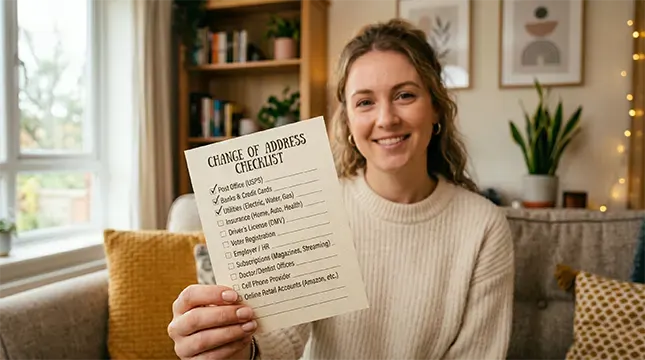
- Start early and plan updates across pre-move, moving week, and post-move.
- Set up Royal Mail redirection to catch missed or delayed post.
- Update banks, credit cards, and financial providers promptly.
- Notify HMRC, DVLA, and the electoral roll with new details.
- Arrange utilities, final readings, and new home service activation.
- Review and update home, contents, and vehicle insurance policies.
- Register with GP, dentist, and transfer medical records smoothly.
- Inform schools, nurseries, and organise children’s education transitions.
- Update employer, payroll, pensions, and workplace benefit records.
- Change delivery addresses for subscriptions and online shopping accounts.
- Pack strategically while identifying overlooked accounts and documents.
- Use professional movers to reduce pressure and save time.
- Inform friends, family, and personal contacts of your move.
- Set up council tax, bins, and explore local community services.
- Carry out final checks to ensure nothing important is missed.
- Download and use a printable checklist to stay organised.
Staying on top of these tasks makes the entire moving process far smoother and helps you settle into your new home without unnecessary stress.
1. Start Early: Why Timing Matters More Than You Think
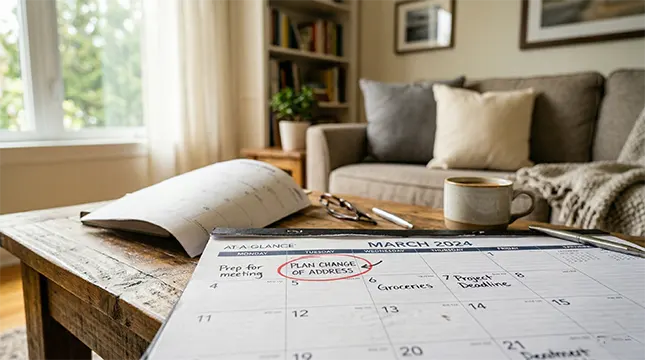
One of the biggest mistakes people make is leaving address updates until after moving day.
By then, things start slipping through the cracks. Letters go to the wrong place, services get interrupted, and important deadlines are missed.
Ideally, you should begin notifying key organisations at least 2–4 weeks before your move. This gives companies time to process the change and ensures a smoother transition.
It’s also worth grouping your updates into phases:
- Before the move (banks, utilities, subscriptions)
- Moving week (mail redirection, removals coordination)
- After settling in (GP registration, local services)
If you’re still planning the logistics side, arranging a professional move through a trusted provider can help you stay on schedule and avoid last-minute chaos.
The earlier you start, the less stressful everything becomes.
GoodMove has been operating in the Colchester region for years, give us call and we can book you in for a free of charge pre-move survey and quotation for your move.
2. Redirect Your Mail Immediately (Don’t Skip This)
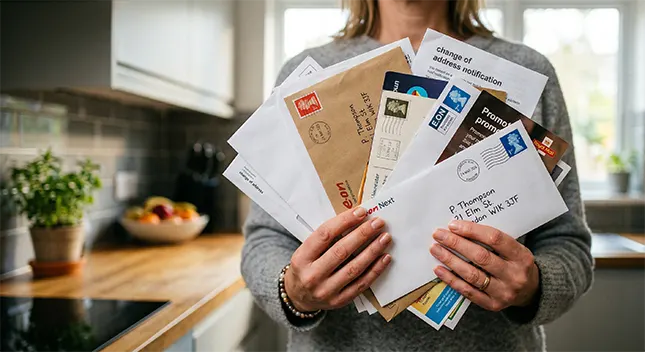
Even if you’re organised, a post will slip through the net. That’s where mail redirection becomes a safety net.
Arguably, this is one of the most important jobs to attend to before you move.
Setting up a redirection with Royal Mail ensures anything sent to your old address gets forwarded to your new one.
It typically lasts 3, 6, or 12 months, which gives you plenty of time to update everyone properly.
This is especially important for:
- Financial documents
- Government correspondence
- Subscription renewals
Skipping this step can lead to identity risks or missed deadlines — so it’s a small cost that saves a lot of hassle.
You can book your redirection a few weeks before your move and time it to start as you move in.
Think of it as your backup system while you work through your full change of address checklist.
3. Notify Your Bank, Credit Cards, and Financial Providers

Your financial accounts should be near the top of your priority list, too.
Any delay here can lead to confusion very quickly, such as declined payments, security flags, or lost statements.
Make sure you update:
- Current and savings accounts
- Credit cards
- Loan providers
- Mortgage lenders
Most banks allow this via online banking apps, making it quick and straightforward.
You may also want to check your billing address matches across all accounts, especially if you use multiple cards for subscriptions or online purchases.
For added security, monitor your transactions closely for a few weeks after moving.
It’s a simple way to catch anything unusual early.
4. Update HMRC, DVLA and Government Records

This is one area you really don’t want to overlook. Government records must be accurate, and failing to update them can cause issues with tax, driving licences, and voting rights.
Make sure to notify:
- HMRC: https://www.gov.uk/tell-hmrc-change-of-details
- DVLA (driving licence): https://www.gov.uk/change-address-driving-licence
- Vehicle logbook (V5C): https://www.gov.uk/change-address-v5c
- Electoral roll: https://www.gov.uk/register-to-vote
Updating these is usually free and can be done online.
Keeping these details current ensures you don’t miss vital correspondence and avoids potential fines or complications down the line.
5. Sort Your Utilities Before Moving Day
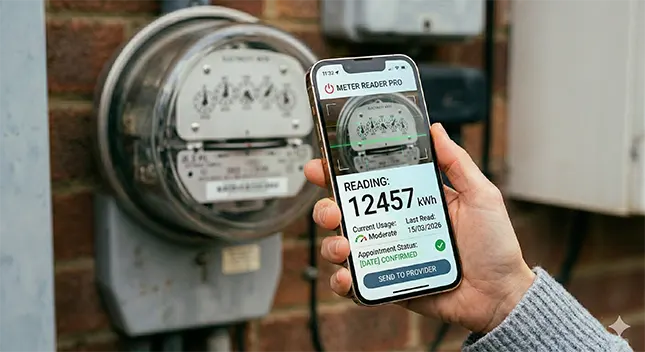
Utilities are one of those things that can quietly cause big problems if left too late. Unfortunately, some of them can’t be attended to until the last minute.
Before moving, contact your providers to:
- Provide final meter readings.
- Set a move-out date.
- Arrange closing bills.
Then set up your new home:
- Electricity
- Gas
- Water
- Broadband
If possible, arrange activation before you arrive, especially if you work from home and need instant internet access. Not to mention the trouble it will cause if your children can use their devices.
Installation can take a week or so, depending on where you live, and this step ensures you’re not left without essentials during your first few days in your new property.
Often, you have to change utility providers if you are moving out of the local area.
Websites such as Uswitch and Utility Warehouse currently offer some great deals, so you might even save money here.
6. Don’t Forget Your Insurance Policies

Insurance is easy to forget but crucial to update.
Make sure you review and update:
- Home insurance
- Contents cover.
- Car insurance
- Life insurance (if applicable)
Your new postcode can affect your premiums, so it’s worth checking whether your policy still offers the best value.
Also, confirm your belongings are covered during the move itself. If not, your removals company may offer transit insurance, something worth asking about when booking your move.
7. Update Your GP, Dentist and Healthcare Services

Moving to a new area often means switching healthcare providers.
Start by:
- Registering with a new GP
- Updating your dentist
- Notifying any other specialists you are registered with.
If you’re mid-treatment or receiving ongoing care, make sure your records are transferred.
It’s also wise to update your address with:
- NHS records
- Prescription services
- Private healthcare providers
This helps avoid delays in appointments, prescriptions, or important medical communication.
8. Schools, Childcare and Education Records

Naturally, if you are moving home with children, there is an added layer to consider; education is another top priority.
Make sure you:
- Inform current schools of your move.
- Transfer records to the new school.
- Update nursery or childcare providers.
Schools often require proof of address, so keep documents handy.
If you’re relocating to a different area, research catchment zones early to avoid complications.
Planning ahead here can make the transition smoother for your child and reduce disruption to their routine.
Moving home with children is not easy and adds significantly to the overall pressure you are under.
GoodMove has written a very helpful blog with 10 great tips to consider when moving home with children.
9. Employers and Payroll Information

Your workplace needs your updated address for payroll, tax records, and official correspondence.
Moving home is expensive; the last thing you need at this stage is an interruption with your wages.
Notify:
- Your employer or HR department
- Pension providers
- Benefits administrators
This ensures:
- Payslips are correct.
- Tax codes remain accurate.
- You are paid on time.
- Workplace benefits stay uninterrupted.
If you work remotely, it’s also worth checking if your new location affects any contractual or tax arrangements.
10. Subscriptions, Deliveries and Online Shopping Accounts

This is where most people forget things — and it shows when parcels go missing or you have to go back to your previous address to retrieve your parcels.
Update your address across:
- Amazon and eBay
- Clothing accounts
- Subscription boxes
- Streaming services
- Food delivery apps
It’s also worth checking the saved addresses in your browser or on your phone, these often autofill outdated details without you realising.
Taking 15–20 minutes to update these now can save weeks of frustration later.
11. Plan Your Packing with Address Changes in Mind

Packing and admin go hand in hand more than people realise.
As you pack, you’ll uncover documents, memberships, and services you may have forgotten, making it the perfect time to update your details.
Label boxes clearly and keep a “moving essentials” folder with:
- Important documents
- Account details
- Your checklist
It keeps everything accessible when you need it most.
If you are doing a DIY house move, Our Moving & Packing Tips will give you some focus when it comes to packing techniques.
12. Use a Professional Mover

At a time when you are pulled in 100 different directions, it makes sense to use a professional removal company to take care of getting your belongings from A to B.
Using a professional packing service helps reduce stress and keep everything organised, especially during a tight moving timeline.
Removal crews pack for a living, and it is really hard, heavy work. They know how to do it properly and, more importantly, quickly and safely.
They will go through your home room by room, wrapping, packing, and labelling boxes whilst preparing an inventory so you can easily find what you need at the other end.
Your belongings will be loaded into their vehicle, ready for transport to your new home.
Upon arrival, all items and boxes will be placed in their appropriate rooms, ready for you to unpack. Boom! All the hard work is taken off your shoulders, literally.
Using professionals means you can focus on your change-of-address checklist and all the other details that require your attention.
13. Inform Friends, Family and Personal Contacts

It sounds obvious, but it’s easy to overlook, but once you arrive, you need to ensure you let all your family and friends know your new address:
- Family and close friends
- Work colleagues
- Any regular contacts
You might also want to send a quick message or update your social profiles.
This avoids confusion and ensures important personal mail doesn’t get lost.
14. Notify Your Local Council
When you arrive at your new home, you then need to set up your council services as soon as possible.
Knowing when your bins should be put out is the first thing to find out. You can easily do this online via your local council website.
Your council tax can be set up or updated on the website too. You can find out more information about setting up your new council tax and how payments work by reading our Ultimate Guide to Council Tax.
Making new friends is a good idea when you first move, and chatting to your neighbours is beneficial because they will be a great source of local information.
While you are on the council website, take the time to check out any local social groups such as mums and toddlers.
Meetup is also a good website for those wanting to make new social connections. Just pop in your location to find things happening near you.
15. Final Checks Before Moving Day
In the final 48 hours, run through your checklist again.
Double-check:
- All key organisations have been notified.
- Utilities are scheduled correctly.
- Mail redirection is active.
- Important documents are packed safely.
This last review is your safety net — it catches anything you may have missed.
It’s also the point where having a structured checklist really pays off.
16. Download Your 2026 Change of Address Checklist
To make things easier, it’s worth having everything in one place.
A downloadable checklist allows you to:
- Tick off tasks as you go.
- Stay organised during a busy move.
- Avoid missing key updates.
Which? Has a great downloadable moving house checklist you can use.
Whether you’re planning weeks ahead or moving at short notice, having a clear plan makes all the difference.
Pair it with a reliable removals team, and you’ll turn what could be a stressful experience into something far more manageable.
Take the Stress Out of Your Move with the Right Support

Changing your address is about far more than redirecting your post. From utilities and finances to healthcare and daily services, every update plays a part in keeping your move organised and running smoothly.
Of course, while the admin matters, so does the physical move itself. That’s where having the right removals team makes all the difference.
GoodMove has been helping individuals and families relocate across Essex, Suffolk, and Norfolk for many years, delivering a service that’s reliable, efficient, and genuinely stress-free.
Here’s what you can expect:
- Convenient home or video surveys arranged around your schedule.
- Tailored removals packages handled by experienced, friendly teams.
- Flexible storage solutions for both short and long-term needs.
Getting started is simple. You can request your free quote by calling the team, completing the online form, or speaking directly with Brad, the virtual moving assistant available on the website.
With expert packing, careful handling, and secure transport, your belongings are in safe hands, leaving you free to focus on settling into your new home.
FAQs: Change of Address Checklist
Should I book a pre-move survey?
Yes, definitely. A survey is essential, whether it is in person or via a video link.
What If I need storage?
Storage is a great option if you find yourself in between homes. Long or short term, GoodMove has onsite storage facilities that are ideal for this event.
When should I start updating my address?
Ideally 2–4 weeks before your move. This gives organisations time to process changes and avoids service interruptions.
What happens if I forget to update my address?
You risk missing important post, bills, and legal documents. Mail redirection can help cover gaps.
Is mail redirection really necessary?
Yes — it acts as a backup while you update everyone properly and protects against missed correspondence.
Do I need to update my address with HMRC and DVLA?
Absolutely. Failing to do so can lead to fines or incorrect records.
What’s the easiest way to stay organised?
Use a structured checklist (preferably downloadable), break tasks into stages, and start early.
slider
 For removals to Ipswich... make it a Good Move!
For removals to Sudbury... make it a Good Move!
For removals to Chelmsford... make it a Good Move!
For removals to Ipswich... make it a Good Move!
For removals to Sudbury... make it a Good Move!
For removals to Chelmsford... make it a Good Move!