

Long-Distance Removals in Essex: What Changes When You Move Over 100 Miles (2026)
Looking for long-distance removals in Essex?
Not every move stays within the county.
Many of our customers relocate well beyond the county boundary, heading north to Yorkshire, west into Wales, or southwest to Devon and Cornwall.
Once the distance passes the 100-mile mark, the whole nature of the move shifts. Timings get tighter, costs are calculated differently, and the margin for error on the day becomes much smaller.
This guide looks at what genuinely changes once a move becomes long-distance, and what to think about if you are planning a long-distance move from Essex in 2026.
Table of Contents
At a Glance: Long Distance Removals in Essex
Long-distance moves Essex customers make are rarely just a bigger version of a local move. The distance changes the planning, the pricing, and the type of removal company you need.
Here is a short overview before we go into detail.
- Timings change. A move over 100 miles often needs a full day on the road, sometimes with an overnight stop before unloading.
- Costs are calculated differently, factoring in mileage, fuel, crew time, and sometimes overnight accommodation for the team.
- Not every removal company is set up for long-distance work, so accreditation and a proper fleet matter more than usual.
- Admin becomes more involved, since you are likely changing GP, school, council, and electoral registration all at once.
- Storage often plays a bigger role, bridging the gap when completion dates on either end do not line up.
- Route planning matters more, particularly around the A12, the M25, and the wider road network out of Essex.
Get these right and a long-distance move runs just as smoothly as one across town. The sections below cover each point in more detail.
How a Long-Distance Move Is Different From Moving Down the Road
A move across Colchester or out to Chelmsford can often be done and dusted within a morning. A move from Essex up to Newcastle or across to Cardiff is a different job entirely.
The distance itself is the obvious difference, but it changes several things underneath.
The removal team needs to plan a route that accounts for traffic, roadworks, and the crew’s legal driving-hour limits. A single van and driver simply are not practical much beyond a couple of hours, so long distance removals almost always involve a full crew, a larger vehicle, and a properly planned schedule.
You also have less flexibility to adjust on the day. A local move can absorb a late start or a delayed completion fairly easily.
On a long-distance move, a delay at one end can affect arrival time at the other, particularly if the drive itself takes five or six hours before unloading even begins.
Planning the Logistics of a Move Over 100 Miles

The further the distance, the earlier planning needs to start. Most removal companies recommend booking a long-distance move several weeks ahead, partly because fewer crews are available for a full day out of the local area, and partly because the packing itself often needs to be more thorough.
Furniture and boxes need to withstand several hours on the road rather than a short local journey, so extra padding, wrapping, and careful loading matter more than usual.
If your move involves a piano, a large amount of glassware, or anything particularly fragile, flag it early so the team can plan the right materials and loading order.
Timing on the day also needs a bit more thought. Some long-distance moves from Essex can be completed in a single day, particularly to destinations within four or five hours’ drive.
Others, especially those heading to Scotland or the far southwest, are sometimes better split across two days, with an overnight stop for the crew rather than pushing a long drive after a full day of loading.
What Long Distance Removals Really Cost

Pricing works differently once distance becomes a major factor.
A local move is generally priced around the volume of belongings and the time needed to load and unload.
While, a long-distance move adds mileage, fuel, and crew time on the road into the calculation, and sometimes overnight accommodation if the move is split across two days.
Choosing a Removals Company for a Long-Distance Move

Not every local removal firm is equipped for a job that takes them well outside their usual area.
Long-distance removals need a company with the right size vehicle, a crew used to full-day journeys, and a route planned around realistic timings rather than guesswork.
Accreditation is worth checking too. Membership of the British Association of Removers is one of the clearest signs of a properly regulated company, since BAR members follow a strict code of practice and offer an Advance Payment Guarantee that protects your deposit if anything goes wrong. It is a useful place to start if you are comparing companies for a move well outside Essex.
A company with a national reach, rather than one purely built around local jobs, is generally better placed to handle the logistics of a long-distance move, from route planning to overnight storage if it is needed partway through.
The Admin That Changes Once You Cross County Lines
A local move within Essex often means updating an address with a handful of organisations.
A move over 100 miles usually means a genuinely new area, a new council, and often a new GP, dentist, and school catchment too.
Council tax needs registering with your new local authority as soon as your move date is confirmed, and it is worth reading our full guide to council tax when moving house for the details.
You will also need to update your electoral registration through gov.uk, and if you hold a driving licence, update your address with the DVLA, which you can also do in a few minutes via gov.uk.
Setting up a Royal Mail redirection before you move catches anything you forget to update directly and is particularly worth doing on a long-distance move, since post is far less likely to simply be handed on by a neighbour the way it sometimes is with a local move.
If you have children, start school admissions early too, particularly mid-year, since places in a new catchment area are not guaranteed and some popular schools have waiting lists.
We have covered the wider process in our change of address checklist, which is worth working through a few weeks before moving day.
It is also worth checking your home insurance and contents cover, since policies can be affected by a change of address and, in some cases, by the distance and route your belongings travel.
Our guide to what removals insurance does and does not cover is a useful read before moving day.
Storage and Bridging the Gap Between Completion Dates

On a long-distance move, completion dates at either end rarely line up neatly, and the further apart the two properties are, the harder it can be to simply drive back and forth to sort out a gap.
This is where storage becomes genuinely useful, not just a nice extra.
A short period of storage, whether that is a few days or a few weeks, gives you somewhere secure to keep your belongings if you need to move out of one property before the next is ready.
We have covered this in more detail in our guide to storage during a house move, including how bridging works in practice.
A Short Checklist Before Moving Day

A few practical points worth confirming before a long-distance move, whichever direction you are heading.
- Confirm whether your move will be completed in one day or split with an overnight stop, and plan around this.
- Book your removal company well in advance, ideally several weeks ahead for a long-distance job.
- Set up mail redirection and update your electoral, DVLA, and council tax details as early as you can.
- Ask whether storage is available if completion dates don’t line up.
- Check your insurance covers the full journey, not just your current address.
How GoodMove Can Help With Your Long-Distance Move
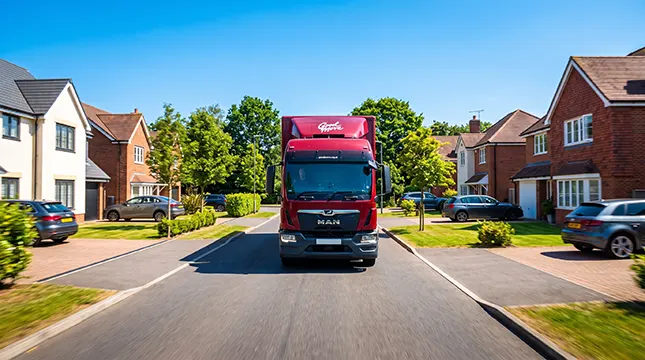
At GoodMove, we have over 35 years of experience handling removals across Essex and much further afield, with a full house removals service built around proper planning rather than guesswork.
Whether your move is a few hours up the road or across the country, our team can talk you through timings, route planning, and whether a single-day or two-day move makes more sense for your journey.
If your dates do not quite line up, our flexible home storage options can bridge the gap without adding stress to an already busy time.
For a free, no-obligation quote on your long-distance move, get in touch with the GoodMove team and let us know where you are heading.
We are always happy to talk through the details before you book.
Frequently Asked Questions About long-distance removals in Essex
What counts as a long-distance move?
There is no single official definition, but most removal companies treat anything over around 100 miles, or roughly two and a half to three hours of driving, as a long-distance move, since it changes the planning, pricing, and timings involved.
Can a long-distance move be done in one day?
Often, yes, particularly for destinations within four or five hours of Essex. For anything further, such as the far north of Scotland or the tip of Cornwall, a two-day move with an overnight stop is sometimes more practical.
Does a long distance move cost more than a local one?
Generally, yes, since mileage, fuel, and crew time on the road are factored into the price alongside the usual costs of loading and unloading. Getting a detailed quote is the best way to understand exactly what is included.
Do I need to change my GP and dentist straight away?
It is worth registering with a new GP as soon as you have settled in, particularly if you have ongoing prescriptions or appointments. Dentists and opticians can usually wait until your next scheduled visit if that is more convenient.
Is storage useful for a long-distance move?
Very often, yes. If completion dates on your old and new properties do not line up, short-term storage gives you somewhere secure to keep your belongings until you are ready to move in.