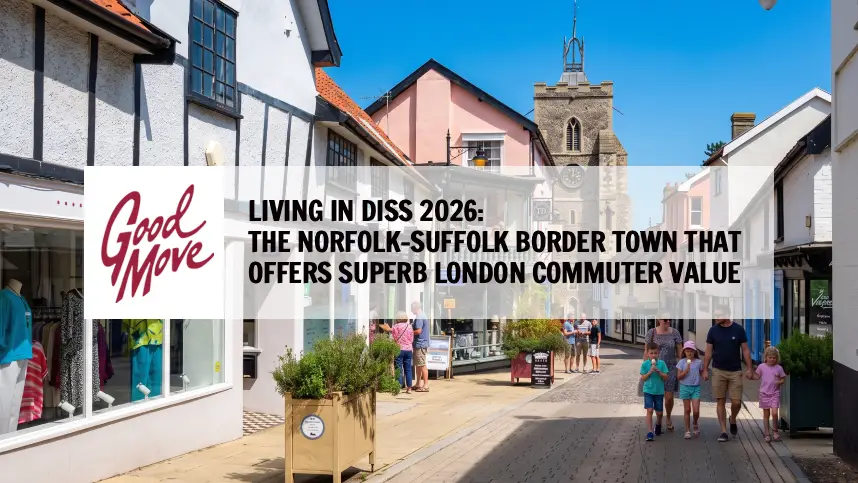
Living in Diss (2026): The Norfolk-Suffolk Border Town That Offers Superb London Commuter Value
Moving home and wondering if living in Diss could be the perfect location for you?
For anyone weighing up a market town with genuine character against the practicalities of a London commute, moving to Diss, Norfolk, ticks both boxes surprisingly well.
Straddling the border between Norfolk and Suffolk, this compact town has quietly built a reputation among relocating families and professionals as one of the best value commuter options in East Anglia, offering a direct rail line into London Liverpool Street without the price tag of towns much closer to the capital.
We cover everything you need to know before moving in 2026, from housing and schools to commuting, cost of living, and what daily life in Diss actually feels like.
Table of Contents
Diss at a Glance
Thinking about moving to Diss, Norfolk, here is a quick overview of what this guide covers:
- Location, a historic market town sitting right on the Norfolk and Suffolk border, close to the Waveney Valley
- Commuting, a direct Greater Anglia line to London Liverpool Street, with journeys typically around ninety minutes
- Housing, a mix of period cottages, Victorian terraces, and newer estates, generally more affordable than towns closer to London
- Local life, centred around the Mere, a striking six-acre natural lake right in the heart of town
- Schools, Diss High School, and a good spread of primary academies serving the surrounding villages.
- Costs, a lower cost of living than many commuter towns, with strong value for families and downsizers alike
- Lifestyle, independent shops, a Friday market dating back centuries, riverside walks and easy access to the wider Norfolk and Suffolk countryside.
- Planning your move, practical considerations to help your relocation to Diss run smoothly.
Diss offers a genuinely rare combination of countryside living, historic charm and a workable London commute, all at a price point that is increasingly hard to find.
Where is Diss and Why It Appeals to Movers
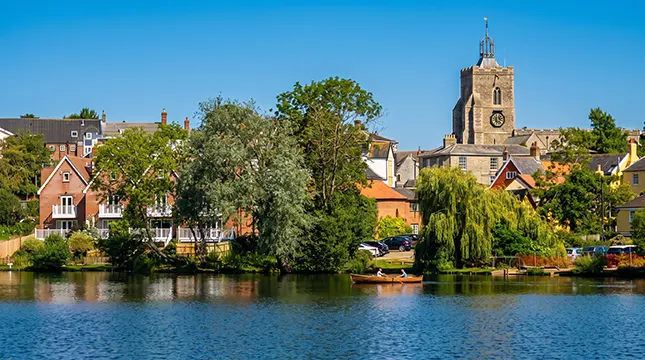
Diss sits in South Norfolk, right on the county boundary with Suffolk, roughly 21 miles south of Norwich and about 90 miles northeast of London.
The town’s name comes from the Old English word for a ditch or embankment, a nod to the Mere, the deep natural lake that has sat at its centre for centuries.
Its position on the Norfolk-Suffolk border means residents get the best of both counties, with the Waveney Valley, Bury St Edmunds, and the wider Suffolk countryside all within easy reach, alongside Norwich and the Norfolk coast.
For anyone considering living in Norwich or Bury St Edmunds but wanting something smaller and quieter, Diss offers a genuine middle ground: real market-town character without sacrificing connectivity.
For a broader look at removals across the wider region, our Norfolk removals and Suffolk removals pages cover the areas surrounding Diss in more detail.
Property Market and Housing in Diss
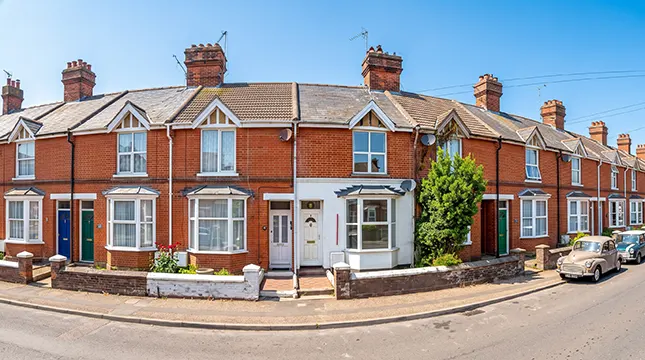
Housing in Diss spans a genuinely wide mix, from Georgian and Victorian terraces in the town centre to newer family estates on the outskirts and period cottages in the surrounding villages.
According to Rightmove, the average property price in Diss over the past year has sat at around £270,000, noticeably below the Norfolk county average and considerably below equivalent commuter towns closer to London.
That value is one of the biggest reasons people are actively searching to move to Diss, Norfolk.
Buyers get more space meaningfully, and often a garden or off-road parking and a garage, for a budget that would only buy a small flat in a town within thirty miles of the capital.
For up-to-date figures, check Rightmove’s house price tool before you start viewings.
If you are budgeting for your move, our guide to reducing moving costs is a useful place to start.
Commuting to London and Beyond
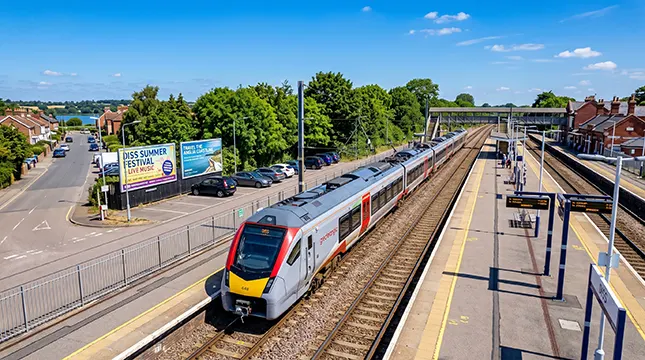
This is the standout reason so many people live in Diss while working in London.
Diss station sits on the Norwich to London Liverpool Street mainline, and Greater Anglia runs direct trains with no change required.
- Fastest journeys: around 80 to 90 minutes direct to London Liverpool Street
- Frequency: roughly two trains an hour on weekdays, with the first departure just after 5 am
- Local reach: direct connections to Norwich in around 20 minutes, useful for work, shopping, or a night out
For those balancing an office day in the city with village life the rest of the week, that timetable makes a real difference, and it is significantly faster than many towns that sit much closer to London on paper.
Full timetables and ticket prices are available via Greater Anglia’s journey planner.
Driving is also straightforward, with the A140 connecting Diss to Norwich and Ipswich, and the A143 heading towards Bury St Edmunds and beyond.
Life on the Mere: Local Character and Community
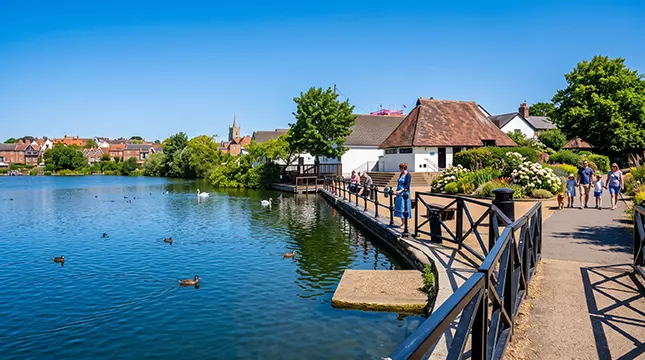
At the heart of Diss is the Mere, a six-acre natural lake and one of the deepest inland lakes in the country, ringed by a boardwalk, benches, and the town park.
It quietly shapes daily life here: a lunchtime walk, a bench to watch the swans, a natural centrepiece most commuter towns simply do not have.
The town itself blends medieval, Georgian, and Victorian architecture, with narrow streets such as St Nicholas Street, home to independent shops, cafes and the Diss Corn Hall, a Grade II listed venue hosting film, theatre, and art throughout the year.
A traditional market has run in the town centre every Friday since the 13th century, still drawing locals in for fresh produce, plants, and local goods.
Schools in Diss

For families, schools are often the deciding factor when moving to Diss, Norfolk.
Diss High School serves the town and surrounding villages for secondary education, taking pupils from 11 to 18 with a sixth form on site.
At primary level, families can choose from Diss Infant Academy, Diss CE Junior Academy, and a number of well-regarded village primaries within the wider Diss cluster, including those at Roydon, Scole and Dickleburgh.
You can check current Ofsted judgements and inspection reports for any of these schools via Ofsted’s reports service, and Norfolk County Council’s school finder lists every school in the Diss catchment area with contact details and admissions information.
Cost of Living

Beyond housing, everyday costs in Diss tend to be lower than in larger towns and cities, particularly for parking, leisure, and dining out.
The Friday market and a good spread of independent shops keep grocery options flexible, and supermarkets cover the essentials without the premium often attached to more built-up commuter areas.
For a wider view of how living costs compare across the UK, the Office for National Statistics publishes regularly updated regional data.
Things to Do and Local Lifestyle

Diss punches well above its weight when it comes to things to do.
Beyond the Mere and the Corn Hall, the town is the starting point for the Boudicca Way, a long-distance walking route towards Norwich that passes the Roman site at Caistor St Edmunds.
Nearby attractions include Banham Zoo, Knettishall Heath nature reserve on the Suffolk border, and the historic Thorpe Abbotts control tower, once home to the 100th Bomb Group and now a small museum.
The food and drink scene has grown steadily too, with independent cafes, pubs and restaurants around Market Hill and Norfolk House Yard offering plenty of choice for a town of its size.
More details on local attractions are available via Visit Norfolk’s South Norfolk guide and the Visit Diss website.
Planning Your Move to Diss

As with any relocation, careful planning makes the biggest difference to how smoothly moving day goes.
Booking your removal company early, particularly during the busier summer months, and decluttering before packing both help keep costs and stress levels down.
If you are downsizing from a larger property, or need somewhere to keep belongings between completion dates, it is worth thinking about storage requirements in advance.
Our moving house checklist and guide to council tax when moving home are both worth reading ahead of your move.
Why Choose GoodMove for Your Diss Relocation
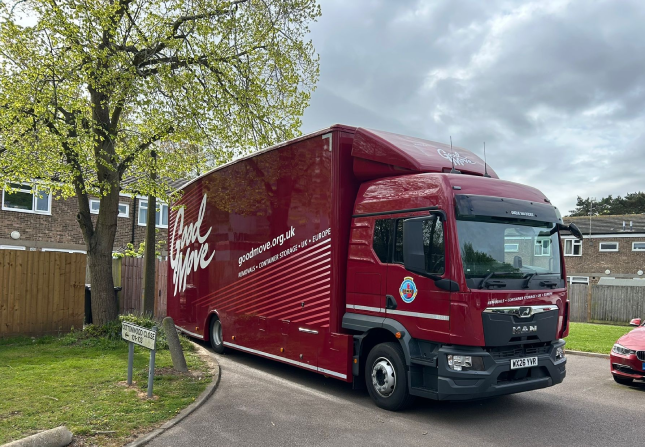
Moving home can be stressful at the best of times, and having a removals partner who understands the local area makes a genuine difference.
GoodMove has been helping families and individuals relocate across Norfolk, Suffolk, and the wider East of England for over 35 years, offering a personal, no-nonsense service from packing through to delivery.
As members of the British Association of Removers, we follow strict industry standards, giving you confidence that your belongings are in safe hands throughout your move.
Whether you are moving locally within Norfolk or relocating from further afield, our experienced team can tailor a package that includes packing, storage, and insurance to suit your needs.
To learn more or request a quote, visit goodmove.org.uk or speak to our team directly.
With the right support behind you, your move to Diss can be straightforward, well organised, and far less stressful than you might expect.
Frequently Asked Questions About Living in Diss
Do I need to pack everything myself?
Not if you don’t want to. Many removals firms offer professional packing services to prepare goods safely before transport.
Do I need to be present during the house move?
Yes, it’s strongly recommended. Being present lets you answer questions, oversee loading and unloading, and ensure everything goes exactly where you want it in your new home.
Is Diss in Norfolk or Suffolk?
Diss sits in Norfolk, in the South Norfolk district, but it lies on the border and is often considered a gateway to both counties.
Are house prices in Diss lower than nearby towns?
Generally, yes. Diss tends to offer better value than towns closer to London and is broadly comparable to, or below, the wider Norfolk average.
What is Diss like for families?
Diss has a good choice of primary schools plus Diss High School for secondary education, alongside parks, the Mere and a strong sense of community that many families find appealing.
When is the best time to move to Diss?
Spring and early autumn tend to offer the best combination of weather and removal company availability. Summer is popular, so book early.
How far in advance should I book a removals company for a move to Diss?
Aim for at least four to six weeks’ notice, particularly if you are moving during peak season such as summer or school holidays.